5 min read
For decades, Nigeria sat at the centre of one of Africa’s most painful economic contradictions.
It was one of the continent’s largest crude oil producers, yet it imported much of the refined fuel used by its people, businesses and industries. Crude left the country. Petrol, diesel and jet fuel returned at a premium. The raw material was Nigerian. The margin was captured elsewhere.
That was not just an energy failure. It was the architecture of dependence in its most visible form.
Nigeria supplied the beginning of the value chain and bought back the end of it. The country carried the pressure through foreign exchange shortages, fuel queues, subsidy costs, inflation, logistics disruption, and a domestic economy permanently exposed to global refining markets it didn’t control.
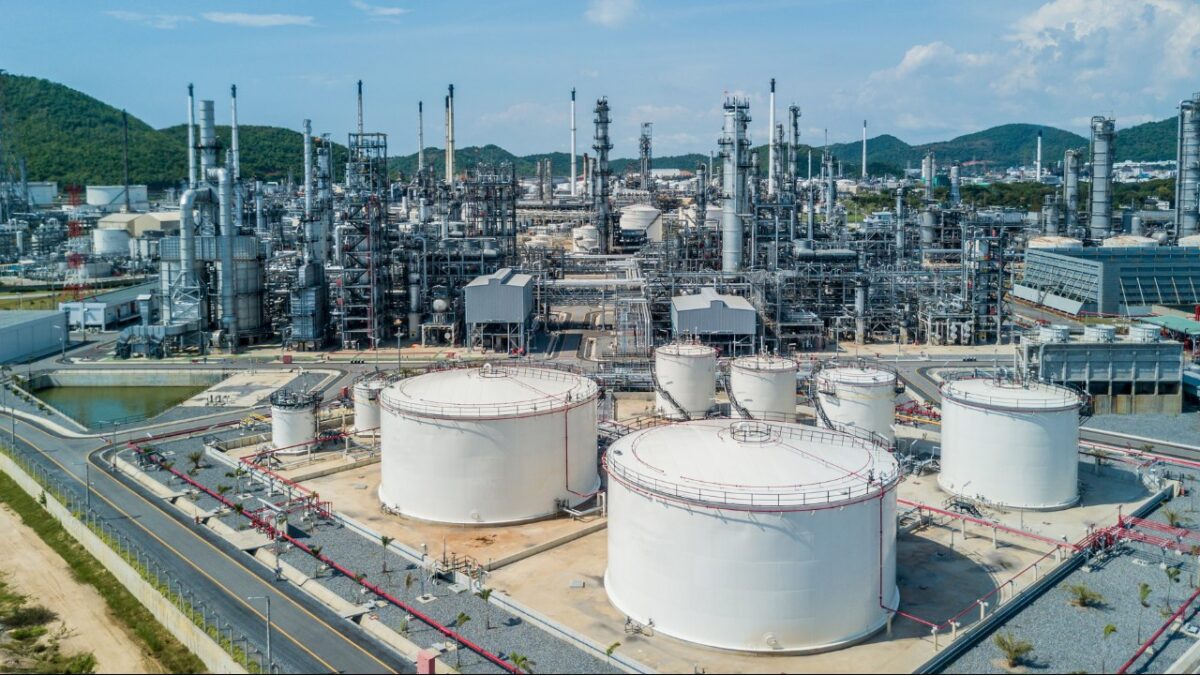
The Dangote Petroleum Refinery doesn’t solve all of that, but it does mark a serious break from the old arrangement. The raw material isn’t just leaving, it’s being processed at home.
Built outside Lagos, the refinery has reportedly operated above its official capacity of 650,000 barrels per day. It’s now seeking around $1bn through a private placement ahead of a planned public listing, with reports placing its valuation at roughly $39.1bn.
Those numbers are striking, but the deeper story isn’t the size of the refinery. It’s the challenge it presents to a model that’s shaped African economies for more than a century.
The continent has long supplied raw materials into global value chains while importing the higher value products made from them. Cocoa leaves West Africa and returns as branded chocolate. Minerals leave in raw or partly processed form and return inside finished technology.
Dangote Refinery matters because it interrupts that structure at industrial scale.
It’s neither a policy paper on value addition nor a conference panel on local processing. It’s a refinery large enough to alter fuel flows across West Africa and put pressure on the old trade relationship between African crude producers and foreign refining centres.
For Nigeria, this shift is significant. The country’s dependence on imported refined fuel placed constant pressure on foreign exchange and made local businesses vulnerable to shocks. When fuel supply tightened, the impact moved quickly through the economy. Transport became more expensive. Food distribution became more expensive. Manufacturers paid more to run equipment. Small businesses that depended on generators absorbed yet another layer of pressure.
But local refining changes the structure of dependence. It gives Nigeria processing capacity it didn’t previously have at this scale. It creates the possibility of a more secure domestic and regional fuel supply, even if that possibility still depends on execution, regulation and market discipline.
The regional implications are already visible. Dangote Refinery has supplied refined products beyond Nigeria, including into West African markets. That begins to shift Nigeria’s role from crude exporter to regional fuel supplier.
The next stage may be even more significant.
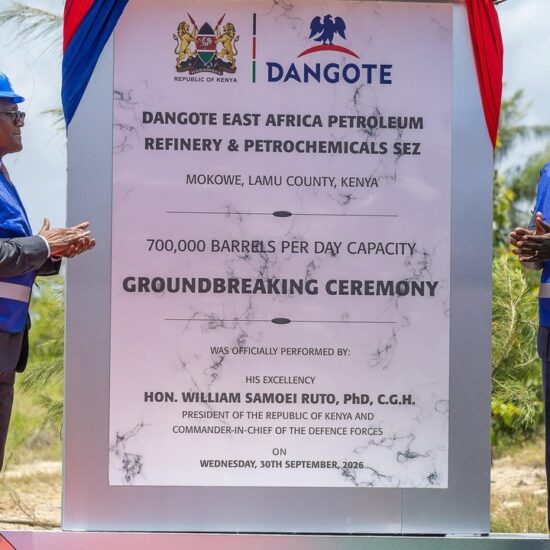
Dangote is now looking east. He’s considering Kenya, specifically Mombasa, as the site for a proposed 650,000 barrel per day refinery that could cost between $15bn and $17bn.
If the project moves ahead, it would place large-scale refining capacity near one of the region’s most important trade gateways. Kenya, Uganda, Rwanda, South Sudan, eastern Democratic Republic of Congo and parts of Tanzania could all be affected by a major refinery positioned on the Kenyan coast.
Lagos anchors West Africa. Mombasa could anchor the East.
This wouldn’t simply be the expansion of one businessman’s empire. It would point to a new geography of African energy supply, built around large refining hubs near ports and regional demand centres. Instead of relying so heavily on refined fuel from Europe, the Middle East and Asia, African markets would begin to source more of their essential energy products from within the continent.
If the refinery reaches public markets at anything close to the reported valuation, it would become one of the most important African industrial market events in recent memory. It would test whether African capital markets can support infrastructure and processing assets of serious scale. It could also allow pension funds, banks and institutional investors to participate in an asset tied to the continent’s industrial future.
However, there’s still a risk of replacing one dependency with another.
A refinery of this scale can strengthen local industry, but it can also concentrate market power. Nigeria is already dealing with the tension between supporting domestic refining and maintaining competition in fuel supply. Dangote has challenged fuel imports where domestic supply is available, arguing that imports shouldn’t be allowed to undermine local production. The logic is understandable, but the risk is also obvious.
Import dependence is a problem, but dependence on a single dominant supplier would be a different problem.
That tension will follow any similar project in East Africa. A Mombasa refinery could reduce the region’s reliance on imported refined fuel, but it could also become a strategic bottleneck if pricing, access, regulation and competition safeguards are weak.
Industrial policy has to hold both truths at once. Local capacity needs protection long enough to grow, but not so much protection that it becomes untouchable. The goal should be industrial strength, not private tollgates dressed up as sovereignty.
The same issue applies more broadly across the continent.
Africa doesn’t need only bigger projects. It also needs the systems that make these big projects work in the public interest: reliable inputs, skilled labour, technical maintenance, storage, ports, finance, transparent regulation and competitive market structures. Without those systems, mega projects become impressive structures sitting on fragile foundations.
The Dangote Refinery isn’t just a success story. It’s a test case.
It tests whether Nigeria can supply crude consistently enough to support domestic refining. It tests whether regulators can balance national industrial ambition with competition. It tests whether regional markets can absorb and trust African refined products at scale. It tests whether African capital can participate meaningfully in the ownership of industrial assets. It tests whether a private industrial champion can strengthen an economy without becoming too dominant within it.
For the continent, the broader lesson is uncomfortable but necessary. Resource ownership isn’t enough. Africa has never lacked resources. It’s lacked control over the systems that turn those resources into power.
The raw material alone is not where the strongest position sits. The stronger position is in processing, storage, logistics, finance, standards, market access and distribution. That is where countries move from being suppliers to being shapers of trade.
The question then becomes whether African states, investors and businesses can build around it, or whether the continent simply watches another powerful structure form in its name.
The refinery has changed the terms of the conversation. The real test is whether it changes the terms of the economy.
FREE · TWICE A WEEK